
Library Ladder Kits

Rolling Library Ladder FAQs
How do I choose the right size rolling ladder for my home?
Measure from the finished floor to the top of the shelving you need to reach, then subtract roughly 12 to 18 inches - a ladder does not need to reach the top shelf, only close enough to reach it comfortably from the second or third rung down. Library ladders are commonly supplied between 8 and 12 feet, and made-to-order ladders can go to 14 feet. The rail height matters too: the rail is normally mounted just below the top shelf, and the ladder length is measured from the floor to the rail.
What is the standard library ladder length?
There is no single standard, because the ladder is sized to the room. The most common finished heights are 8, 9, 10 and 12 feet, measured floor to center of the rail. Made-to-order ladders are cut to your exact height up to 14 feet (163 inches). If your ceiling height falls between standard sizes, order made-to-order rather than trimming a stock ladder, as the rung spacing and hardware positions are set at manufacture.
What are standard library ladder dimensions?
Library ladders are supplied in two standard widths: 16 inches and 20 inches. The 16 inch width suits tighter spaces and narrower aisles; 20 inches is more comfortable for regular use and is the more common choice for home libraries and kitchens. Rails are 1 inch in diameter and come in straight sections that can be joined with a splice kit to run any length.
What angle should a library ladder sit at?
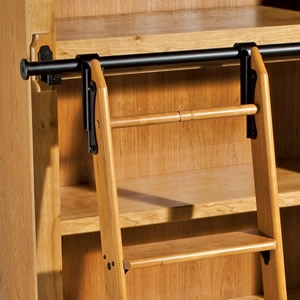
A rolling library ladder typically stands at roughly 65 to 75 degrees from the floor. The exact angle is set by the ladder length and how far the rail sits from the shelf face - a longer ladder on the same rail height leans further back. The hardware allows the ladder to pivot as it rolls, so it maintains its angle along the whole rail.
Can I install a rolling ladder system myself, or should I hire a professional?
Most kits are a competent DIY installation. The critical part is the rail: it must be fixed into solid backing - studs, a ledger board or the cabinetry itself - not into drywall alone, because the rail carries the full weight of the ladder and the person on it. If your shelving is freestanding or you are unsure what is behind the wall, have a carpenter fit the rail. Everything after that is straightforward assembly.
What safety features should I look for in a rolling library ladder?
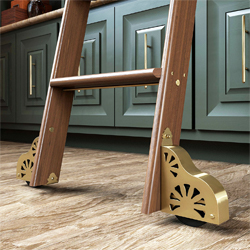
Three matter most. Braking wheels lock the ladder when weight is applied, so it will not roll while you are on it. End stops fit to each end of the rail and prevent the ladder rolling off. Non-skid feet keep the base from sliding on hard floors. On a rolling kit, braking hardware and end stops are the two you should not skip.
What is the difference between a rolling and a non-rolling library ladder?
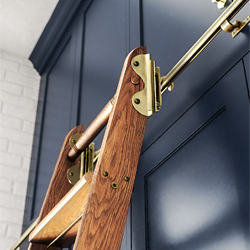
A rolling ladder stays on the rail and slides along it on wheels. A non-rolling ladder hooks over the rail and lifts off completely when you are finished, which suits rooms where a permanently visible ladder would be in the way. Non-rolling kits use sliding hook fixtures and non-skid feet instead of rollers.
Can a library ladder go around a corner?
Yes, with curved corner rail sections. These join straight rail runs at a corner so a single ladder can serve two adjoining walls. The ladder needs rolling hook or swivel top guides rather than fixed rollers, so the hardware can follow the curve.
Are replacement parts available if my rolling ladder hardware wears out?
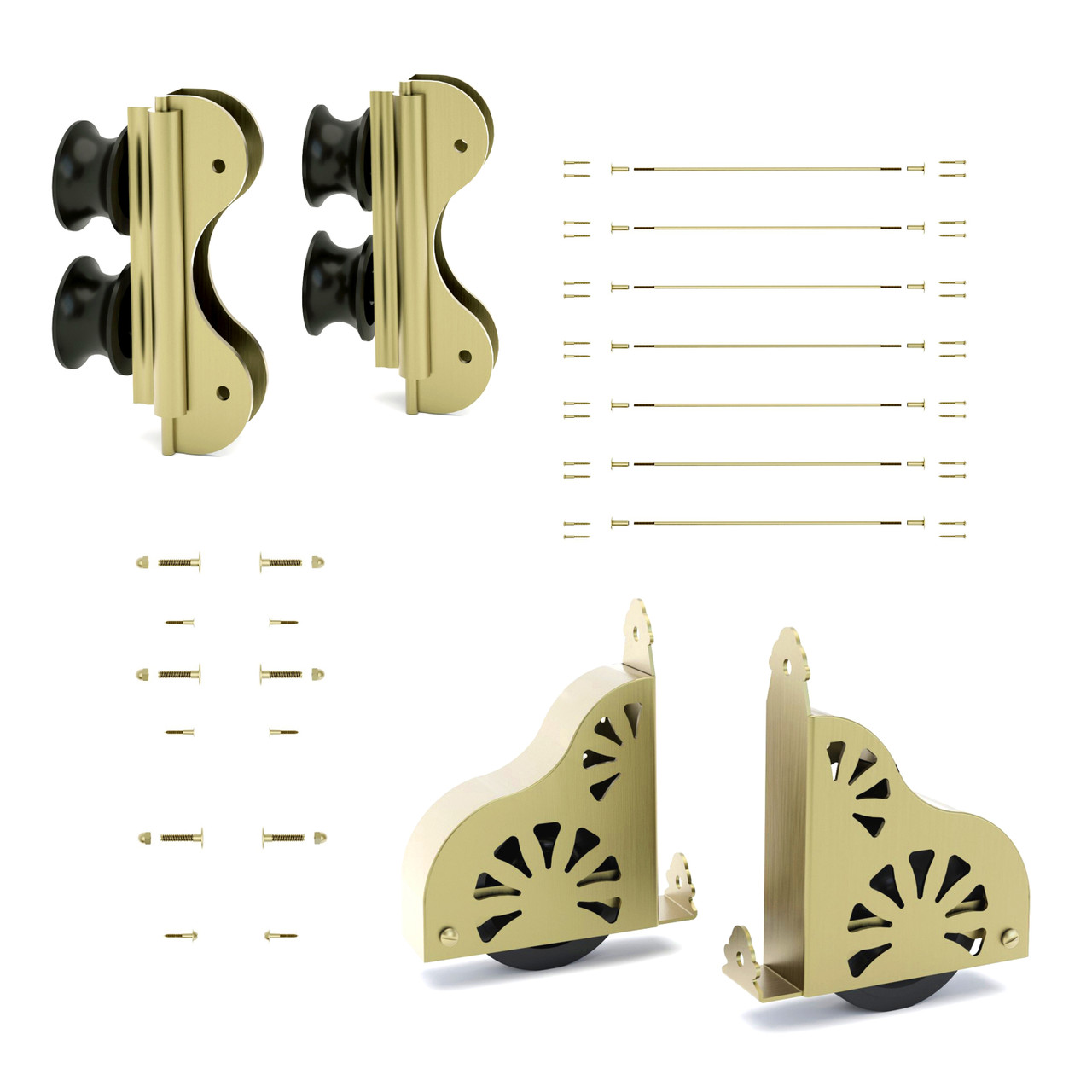
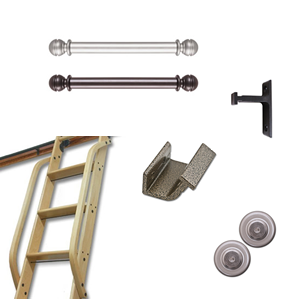
Yes. Rollers, wheels, top guides, rung supports, end stops, brackets and rail sections are all available individually from our library ladder components range, in every finish we supply. If you are matching parts to an existing ladder, the finish name and the width (16 or 20 inch) are usually enough for us to identify what you need.
Do library ladders come finished?
Ladders ship unfinished so you can stain, paint or seal them to match your cabinetry or can be pre-finished with a factory clear coat. The hardware is finished at manufacture in your chosen option and needs no further treatment.